Showing posts with label Photography. Show all posts

Saturday, January 19, 2013

Olympus OMD camera

Being late to the game, I recently bought an Olympus OM-D EM-5 camera. Like a lot of people, I hate the name so I'm just gonna call it the Olympus OMD for the rest of this review.

Back in 2009, I bought a Panasonic GF1 camera. At that time, I was looking for a smaller camera compared to a DSLR however I wasnt willing to compromise on picture taking capability by using a compact camera. The GF1 was, to me, a perfect choice. It was light, had great picture quality and could do videos better than my DSLR. What drew me to the GF1 most of all however was the fact that it looked retro. It looked and worked (mostly) like a mini digital rangefinder would.

Mid last year, the Olympus OMD was announced and it drew rave reviews from the Olympus faithful but for some reason, I wasnt that interested. I have always been a Nikon user, with occasional dabblings in Canon, Pentax and Fujifilm. I did however love my old Olympus Stylus Mju. So much so that I still have it even though I havent shot a roll of film in years. And I also had an Olymus C5060 briefly which I was ever so impressed with.

With that in mind and also because my GF1 was showing signs of being long in the tooth i.e. the low light capability really isnt that good and the AVCHD format was just giving me fits in terms of editing - I decided to get an OMD.

Playing with the camera briefly, I purchased it in Hong Kong as a body only kit, some things immediately become clear and some things start to annoy me.

First, the really good stuff, the picture quality in low light is really good and the IBIS ("in-body image stabilization") is one of the best of its kind. The picture quality is not Nikon D4 good but its borders on being as good as a D90. Olympus added a small flash in the kit however the power output is rather poor and after a few shots I packed it carefully in the box and do not intend to use it again bar some urgent need for fill in flash. I intend to use the OMD using existing light.

The OMD is probably the fastest micro four-thirds camera that Olympus has ever produced. For years its Pen line, Olympus AF systems had a weird "hunting for focus" behaviour which my Panasonic GF1 never had. AF-speed wise and responsiveness wise, I dont think anyone will complain much about the OMD. Features-wise, the OMD has lots of other cameras licked - it has a pretty good EVF plus LCD, a "virtual horizon" feature, 9fps, tiltable LCD, light weather proofing, a magnesium alloy body - you could go on and on.

Onto the negatives - my biggest grip is regarding the ergonomics and usability. Unless your hands are small, you will find the grip to be slightly awkward to use. Its a little bit like I have to learn how to hold the camera vs having a camera grip being moulded to fit my hand. The eyelet for the shoulder strap eats into my palm each time I grip the camera tightly. Its more of a finger hold camera vs a full in your palms type of camera. The buttons are fiddly.

Olympus (to be fair - the same holds true for all pure play camera manufacturers) is not and has never been good at UI. The OMD has a lot of configurability and settings hidden and disabled. When I first got the camera - I couldn't figure how to set the ISO. One of the first things you have to do when you get this camera is to enable the Super Control Panel (go [Camera] Control Settings in Custom Menu > section D > and enable LIVE SCP). For some reason Olympus thinks that you would want a different setting for each exposure mode - a sure sign of a programmer making a decision vs a photographer. My advice - do a google search on "OM-D tips" and setup the camera once according to how you like to shoot.


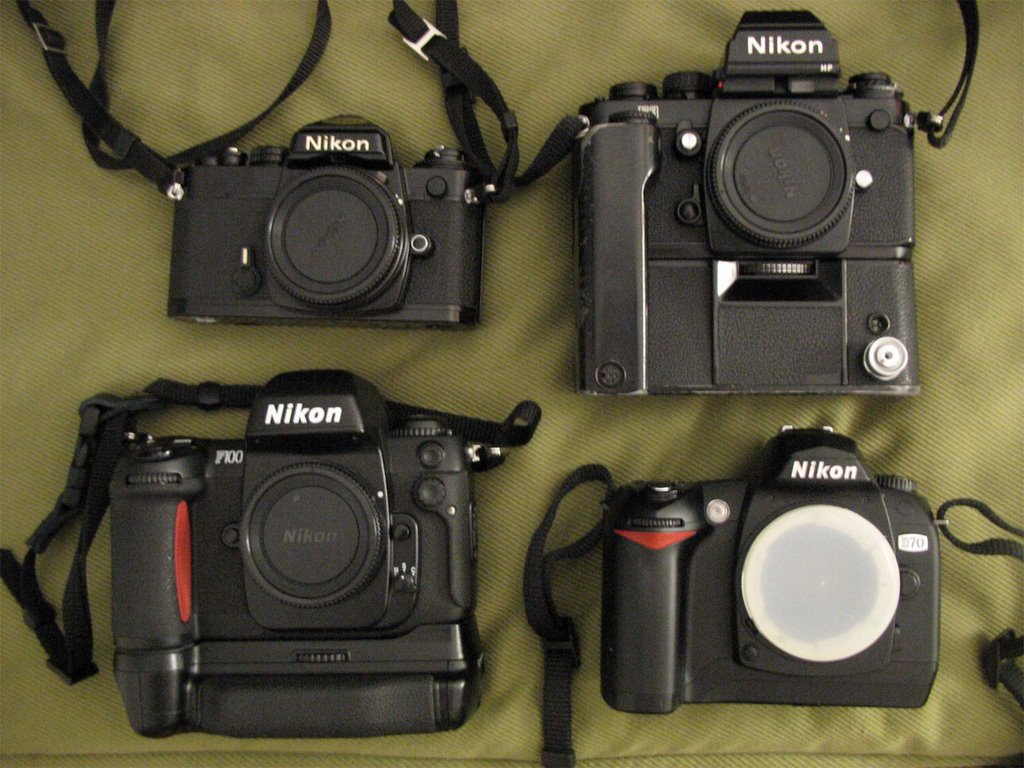
To be honest - for all my complaints - I do not think there is a better camera for me. Its retro (check out this pic of my OMD with an old Nikon) and it takes good pictures. Enuff said.

Monday, July 26, 2010

Panasonic Lumix GF1 Tips

More of a reminder to myself rather than a blog, might be useful to other GF1 owners as well:

Settings

Aspect Ratio - set to 4:3 as it retains the most pixels (the aspect ratio of the GF1 sensor is 4:3), other modes e.g. 3:2 and 16:9 crop pixels.

Auto ISO - set to max ISO800 or in a pinch ISO1600 (really pushing the boundaries)

AF Mode - call it habit or whatever, I tend to use the GF1 in single AF mode (the rectangle with a large black square). The most predictable mode in terms of locking on a subject.

Film Mode - typically have this set to DYNAMIC for both colour and also B&W as a personal preference.

Mode Dial - primarily use the A mode (aperture priority). Flick the thumbwheel right and left to set the aperture to control depth of field.

Shoot w/o Lens - as I sometimes use Nikon lenses on the GF1 (with an adapter), set to ON.

Video - since I only have the 20mm lens right now, I have CONTINUOUS AF set as OFF and if I want to AF, I would set the AF target and half press the shutter release button. As most users of the GF1 would know, you can activate video recording using the "motion picture button" or using the "Motion Picture P mode". I would recommend the latter method most of the time as you would have full control of aperture and exposure compensation. Preferred focussing mode is MF.

Others

Carrying the GF1 - my personal preference is to use a wrist strap vs a shoulder strap for the GF1 and treat the camera more like a large point and shoot (since it doesnt have a builtin viewfinder anyway), makes the grip that much more secure.

GF1 Grip - I dont have large hands but the GF1 grip seems small and slippery for me - what I did was to gaffer most of the grippable areas of the camera to enhance the grip. About a 8inch roll of gaffer table should suffice. I cant understand pp who pay good money for ready made "leatherette" stickers when good ol gaffer tape would do..


GF1 Flash - I didnt want to buy too many accessories for the GF1, therefore I reused my Nikon flashes for the camera e.g. if you decide to use flash using a SB-22s, just set to M mode on the GF1 and use the setting of  1/125 and an aperture of f.6 and set the flash accordingly. Works for me. One tip if you use the onboard flash - set the ISO a bit higher e.g. ISO 400-800 to boost the flash range.

GF1 Bag - The GF1 with a 20mm is small enough and light enough (442g) that it fits in a small backpack or a ladies handbag without any problems. I think if you want a dedicated bag for just the GF1 and the 20mm, a Lowepro Apex 60AW would be a good choice. Due to the fact that I cant find this bag around in stores, I decided to use an old Hedgren shoulder bag that I had lying around. Slightly padded and very non-descript. You get the picture.

Monday, April 19, 2010

Crumpler 6 Million Dollar Home camera bag


Not a good month for me, so decided to engage in some retail therapy and get a replacement for my old Lowepro Stealth Reporter 200AW.

Crumpler had recently updated their range of bags to incorporate what they call a "silencer" which fixed one of my pet peeves - the sound of velcro riiipping when I opened their bags (one of the reasons why I sold off my Budgie Smuggler years back. The silencer design uses a piece of ballistic nylon to cover the velcro when moments of silence are required.. e.g. when you are sneaking in the forest to take a shot of a bird and need to pull out your camera.

After much agonizing about whether to get the smaller 5 Million Dollar bag or the larger 6 Million, I decided to get the Crumpler 6 Million Dollar Home bag since it came with a shoulder pad AND it allowed me to fit in a netbook if I chose to to. In terms of color, I was deliberating between the dark brown bag or the black one.. in the end I went with black as I thought the cool green inserts looked better than the traditional Crumpler powder blue.

So, what are my thoughts about the bag.. well, nothing bad to say actually. It allows me to carry the two main configurations that I use - the street shooter/travelling configuration of a DSLR body and a small prime plus a wide angle on the side and a small tabletop tripod and flash in the other pouch or the birder configuration of a DSLR body and my 80-400mm lens. In my opinion, it is too large for rangefinder style micro 4/3s cameras like the Panasonic GF1 and the Oly EP series - the 4 or 5 million dollar home would be better bets. However, it is a pretty good fit for a GH1 with a couple of lenses.

The padding is adequate, and typical of many other good camera bags out there, there are many handy pockets to store a small notepad and memory cards. It is missing some features I like on my SR200 - namely, the belt loop, tripod straps and the waterproof cover - I have to say so that I have never used any of these features on my SR200. Practicality, however, isnt the reason why people buy Crumplers, there are other bags out in the market that have more fetaures, have better weatherproofing, better strap.... people buy Crumpler bags because of the coolness factor and I think that this bag looks way cooler than my old Lowepro...

Monday, January 07, 2008

2008 Nikon Lens Setup

Right now, my lens collection (situation?) looks like this:

AF Primes >>>>>
24/f2.8D
50/f1.8D
85/f1.8D
105/f2.8D

AF Zooms >>>>>
12-24/f4G DX
20-35/f2.8D
18-70/f3.5-4.5G DX
24-120/f4-5.6G VR
70-210/f4-5.6D
80-400/f4.5-5.6D VR

MF lenses >>>>>
35/f2.8
50/f1.8
100/f2.8
75-150/f3.5

My most used lenses are the 18-70mm on my D70 and the 50mm coming in a close second. For occasions, I usually pick either the 12-24mm or the 24-120mm but not both. For travel, I usually bring these two lenses or if I am really travelling light, just the 18-70mm. On occasion, I have brought both my F100 and D70 on a trip, in these cases, I will mount the 24-120 on the F100 and the 12-24 on the D70 however the 12-24 will still work with the F100 from 18mm onwards. I have only brought the 70-210mm on a trip once and even then hardly used it. My 80-400mm is my "zoo" and birding lens and the 105mm is my product shot lens. Which leaves me with the 24mm, 50mm and the 85mm. These primes are light, portable and fast and I use them when I want to test my creativity in shots and also indoors.

My MF kit - I ran out of film in March after Europe so I havent been shooting much, however, I tend to use the FEs more than the F3 for some reason, maybe its because of their light weight. My most used lens in the MF kit is probably the 35mm however, the picture quality of the 75-150 leads me to keep that in the bag as well.

I have had these lenses for some time and at no time have I felt that I needed anything more. Of course, I lust for better versions of the lenses I have e.g. 17-35mm f2.8D to replace my 20-35mm, 85mm f1.4D to replace the f1.8 version that I have, 70-200mm f2.8G VR to replace my 70-210mm etc and so on, but my limited shooting just doesnt justify getting better lenses. These are also heavier and I prob will never bring them out for travel etc.


In time, I want to add a small pair of Nikon Monarch 8x42mm binoculars, and I might get a D300 (can reuse CF cards from the D70).

Tuesday, December 25, 2007

Digital Cameras with Rotating LCDs

In my opinion, rotating LCDs (Canon calls them vari-angle LCDs, other manufacturers call them flip and twist LCDs) are an essential feature for digital cameras. They bring many advantages to the photographer e.g. being able to shoot from high/low angles, take self-portraits, offer some protection for the fragile LCD during travel, reducing the "arms outstretched staring at the LCD look", allowing stealthy photography. To me, a small pocketable digicam with a WA lens and a rotating LCD (ideally with image stabilization or vibration reduction) would make the ideal travel camera. Most of the cameras I owned previously have this important feature - e.g. Canon A610, Olympus c5060.

Which is why I feel it is a shame that camera manufacturers have neglected to include this feature into new releases. Canon, for example, had a large range of cameras with the feature (including the A-series, S-series and the G-series) before pulling the plug on this with current releases e.g. the A710IS, G7/G9. Only the S-series has this feature by default and also selected A-series cameras. Apparently, there are some patent issues that restrict other manufacturers to include the "vari-angle" design into their cameras... boo on you Canon.

I have included a small manually compiled list of current digicams with a rotating LCD (readers please contribute with other cameras which I may have missed out), a big "boo-hoo" to DPReview for not including this in their features search, cmon guys its time to update your search criteria.

Canon
- Canon PowerShot A650 IS
- Canon PowerShot S5 IS
- Canon PowerShot TX1 *not really a camera this..

Nikon
- Nikon Coolpix S10

Olympus
- Olympus E-3

Sony
- Sony Cyber-shot H9 (only allows tilt, better than nothing I suppose..)

Sunday, September 02, 2007

Photo Organizing Strategy

I've been struggling with this for some time now on my old PC, but with the new one here, I am doing a migration of all our family photos and boy is it ever tough. The problem is, like a lot of people, I have files all over the place in several different hard drives and there are duplicates. I also have several backups and those arent helping. I have problems deleting backups!

My plan now is to create a single master photo repository in my new 320gb hard drive and create a single sync backup on my 200gb USB drive. Now how am I going to organize them and have a good strategy to ensure I can find a photo after a few years. Some of my current thoughts...

a) For events that happened e.g. a party or a vacation,

d:\photos\year\yearmonth_subject (e.g. d:\photos\2007\200701_harrysbirthday)

b) For miscellaneous snaps,

d:\photos\year\subject (e.g. d:\photos\2007\auctionshots)

c) For subjects that I want to track over time,

d:\photos\subject (e.g. d:\photos\harry)

Obviously, for some of these folders, a good naming strategy for the filename needs to be in place - to make the file name unique within the taxonomy. I am going to look for a good batch renaming software. Will keep you guys posted..

Friday, August 31, 2007

Bought my new [photo editing] computer.. at last!


After agonizing over the past month.. reading up on the hardwarezone and vr-zone forums, visiting Sim Lim Square numerous times and poring over price lists from Fuwell, Bell etc.. I finally took the plunge on a new PC.

My old machine - a Pentium 3-733 with 512MB ram had lasted me for some time (7 yrs!), so I wanted to build a machine that would last for quite a few years mainly to manage my photos and run Photoshop. The major consideration for me was the graphics card and since I dont game too much (except for the occasional Tiger Woods golf game or Diablo/Guild Wars slash), I decided to get a low end graphics card that will support DX10 for longevity. My final config ended up like this.... purchased from PC Themes on the 4th floor of Sim Lim Square -


  • CPU - Intel C2D E6750 2.66Ghz (with Arctic Cooling Freezer 7 Pro heatsink/fan)
  • Motherboard - Asus P5K-E (comes with wireless!, been using Asus for years)
  • RAM - Crucial Ballistix PC6400 DDR2-800 (decided to splurge on some nice bling bling ram even though they were double the normal ram :))
  • Hard disk - Western Digital 320GB Sata2 16MB cache blah blah
  • DVD Writer - Asus Lightscribe DRW-1814BLT Sata 18x (cheap lah..)
  • Graphics - Asus EN8600GT 256MB (a tough choice but I decided to go with nVidia because I am not sure how ATI will fare under AMD control)
  • Casing - Lian-Li PC-A05B (small and cool case.. with 120mm fans)
  • PSU - Silverstone Element ST50EF-Plus 500W
  • Monitor - HP w2207 22inch LCD (coming from a 15 incher.. this is bliss!)
  • Keyboard - Logitech Classic Keyboard Plus
  • Mouse - Logitech Mx518
  • Speakers - Bose AcoustiMass 5 (hooked up to an old Technics amp)
Installed it all together with my wife (love u b!)with minimal screaming.. :) Took 4 hours.. what with all the reading of the manuals and with Harry interrupting... Vista and Photoshop CS2 here we come!

Tuesday, July 10, 2007

Which metering to use on Nikon DSLRs

1. Matrix metering - I use it most of the time unless there are areas of high contrast in the picture. Might not work well when the image has mostly light or dark areas.

2. Center weighted metering - I understand what center weighted metering is (i.e. it takes the exposure reading from roughly 70% at the center of the scene) but I have never understood why it still exists in modern Nikon DSLRs. It seems like a legacy mode (pre-FA) before matrix metering existed. People suggest to use this for portraits or when the target is in the middle of the frame but Matrix metering isnt dumb anymore and wont give you those black faced/bright landscape shots often anymore. You should activate your fill-in flash in these situations anyway. One explanation when this mode still exists is to use it when the matrix meter tries to be too smart or is fooled to giving the wrong exposure you want. My solution is to use spot metering in these cases.

3. Spot metering - use it when you want to tell the camera which area of the scene you want to take a reading from. On most Nikons, this still relies on the center sensor. IMHO, this mode is the most important of all and all cameras should have it together with a manual exposure option. It should be possible to take all your shots using spot metering. You just have to select a target that is middle grey (18% grey) to get a balanced exposure. A good tip I use is to meter from the blue sky as often as possible.

Friday, June 29, 2007

Why I buy Nikon over other camera makes

  1. Nikon is one of the only camera manufacturers to have retained a common lens mounting system throughout all these years, the venerable F-Mount (ever since 1959 with the Nikon F. For more info click http://en.wikipedia.org/wiki/F-mount). I would stick to Nikon for this reason alone. This means I can use lenses dating back to the 1980s such as the E-series 75-150mm f3.5 on my 3-year old D70 (yes, of course you will lose metering but who cares with the ability to preview shots instantaneously). Which makes a huge difference in preserving the longevity of your system.
  2. Nikon is one of the only camera manufacturers that still innovates and produces great film SLRs such as the F6. The legacy of photography is film. All photographers should remember this.
  3. Nikon is the one of the only camera manufacturers who still persists in innovating with their products. As an example, check out the Nikon SU-800 and SB-R200 Macro Flash system (available as a set as the R1C1 http://www.nikonusa.com/template.php?cat=1&grp=4&productNr=4803) which replaced the slightly clunky Sb-29s.

Friday, June 16, 2006

Crumpler Formal Lounge mini review

Most serious photogs will tell you the same thing - next to lens choices, buying a camera bag is one of the hardest things to decide on. There are literally tons of websites recommending the best camera bag to use - try cambags.com for some good pictures of cameras in bags. After my NZ trip where I brought my SR 200 crammed with 2 bodies, 3-4 lenses and a backup and nearly broke my shoulder, I have sworn to become a photo minimalist. Most people simply won't use all that gear when travelling for leisure.

Nowadays, I usually carry a body and extra lens or a small compact digicam like my Fuji F31fd as a daily shooter. For travels, I only carry a single SLR body, 2 lenses max and one compact camera as a backup (used to be my Olympus Stylus Epic, now using the Fuji F31fd) plus a tripod (usually a Manfrotto 3007 Table top tripod, sometimes a Manfrotto 719B). I already have a shoulder bag - a Stealth Reporter which I mainly use in Singapore when I go for events and family occasions, but I wanted a backpack for travelling so I wouldnt have to carry another bag as a daypack plus I wanted a bag that could carry a laptop.

Popular options in Singapore are Lowepro (Compu-trekker, CompuRover, Stealth AW, Compudaypack etc) and Crumpler. As I mentioned earlier, I really like Lowepro, especially their Stealth Reporter line) but most of their traditional camera backpacks make the carrier look like a ninja-turtle i.e. it looks like a person carry a box. As mentioned earlier, I wanted a bag that could function as a daypack also, and the Trekker line from Lowepeo were mostly for dedicated camera carrying use. The designs were really stupid too, in order to access the camera equipment, you have to place the bag on the floor straps down e.g. in dirt etc and open the main flap - too slow to access and ruining a perfectly good shirt maybe.

After spending some time traversing the super-confusing Crumpler website, I finally got the Formal Lounge in Olive. This bag doesnt good enough for someone to want to steal stuff from it, and the main compartment is accessible only from the rear - i.e. facing the person's back. I usually put a bottle of water and into the main compartment in the back, my Manfrotto table tripod in the padded laptop compartment - unfortunately not removable. A 15inch laptop can fit into the laptop area. You could easily slip in a light jacket or even a small flash in there. The bag has external cloth "slots" on the right and left so you could slip a tripod leg into the hook for carrying a tripod; there is no "designated" tripod holder. I hardly carry a large tripod so thats ok.

The main camera compartment is tiny and has 3 padded compartments. You can carry a semi-pro SLR with a mid lens mounted in the middle and smaller stuff like lenses on the left and right. I usually bring my Nikon D70 with 12-24 mounted (or 18-70) plus a 24-120 or a 50mm. If I wanted to carry my 80-400mm, I would have to put this in the main compartment. There is space to carry a blower as well. The camera padding is removable so you can use this bag as a normal laptop backpack.

As for comfort, I carried this bag around Paris for a day with much more gear that I listed above and I survived. A little sore yes - Crumpler makes really hard bags - but it gets the job done. This is not a hiking style bag. The back of the bag has 2 padded areas that gets hot quickly and cannot match the comfort and coolness of my Deuter AirComfort style backpack.

Would I buy this bag again? Probably not. I realize I hardly will bring a laptop AND camera equipment around - the combined weight would be a killer. Mostly for travelling then. But the materials used look like they would last a long time. Hmm.. maybe I could pass this to Harry in lets say - another 10 years :)?

Tuesday, April 04, 2006

Manfrotto 719B - the perfect travel tripod?


Looking the major tripod manufacturers today - you have Gitzo, Manfrotto and the rest. The rest includes quite ok brands like Velbon or Slik and the china brands which I wont mention...

I guess the perfect travel tripod would be the Gitzo carbon fiber GT1540 until you hit the cost issue (around 500 USD)... ugh.. thats serious $$$

So what is a perfect travel tripod to me?? It

- must be light at around 3lbs (1.36kg) or so
- must extend to the right height for me - at least 1.2m for the legs w/o the center column, plus head and camera this would bring it to around 1.5-1.6m through the eyepiece.

- must fold and fit into a backpack while at <50cm,>
My Manfrotto 719B NEARLY fulfils all of the requirements and its 1/5 the cost of the Gitzo at around 100 bucks new. It went with me on my New Zealand trip and did its job well. Its only weakness is the built-in head which cannot support heavier lens setups like a 70-200mm f2.8. In a fit of shopping-lust, I replaced it with a Velbon carbon fiber version with a Kirk Enterprises head and my 719b is used now as an overweight light stand.

Saturday, March 04, 2006

"IDEAL or REQUIRED" lenses for Nikon shooters?

There's always been a lot of talk in the Nikon fraternity about the trinity of lenses - meaning the trio of f2.8 lenses, namely the 17-35mm, 28-70mm and the 70-200mm VR. These cover the focal range of wide, normal and telephoto with supposedly superb sharpness and color but at nearly SGD$7000 aren't exactly cheap. I say supposedly since I dont own any of the trinities... :)

But frankly, these three lenses might not be the best at shooting in certain situations e.g. for macro, street shooting, birding and portrait shots. They are great for what can be classified as general purpose shooting, things like landscapes, holiday shots, family, sports and wedding shooting.

So what can be classified as a set of practical and "ideal" set of lenses for a Nikon user to cover almost any situation a photographer will face? Well, I can give you the standard reply that it "depends on what you shoot" but that would be copping out! I will simply make the assumption that you are like me - an amateur shooter - someone who takes pictures of a wide spectrum of subjects - and just wants to be prepared for any occasion. I will also make the assumption that most people do shoot both film and digital and that you DO have a budget! As a result, I have attempted to choose lenses with a budget of about five thousand Singapore dollars. Now that may seem a lot, but it will be approximately be the price of a decent Nikon DSLR (I recommend the D70s, if you can afford it the D200), film SLR (I recommend the the F100 whole-heartily). I have focussed (pardon the pun) on AF lenses and will save the AIS lenses for another post...

Wide lenses (for going wide)
  • Nikon 12-24mm DX F4. This would be the most expensive lens in the arsenal and to me is the essential choice to cover the wide angle if you are using a digital SLR with a 1.5x crop of a 35mm frame. Some people might say that the 17-55mm would be a better choice but since 17mm is hardly wide enough (25mm in 35mm terms) and this lens is much more expensive than the 12-24 (around SGD$2,000 when I last checked), I hesitate to recommend it. I use the 12-24 frequently whenever I travel, because it can capture such dramatic landscapes, and to a lesser extent for parties, weddings and gatherings). Costs around SGD$1375.
  • Nikon 20mm F2.8. The 12-24 lens is great choice for your digital body, but what about your full frame film body? To get the 17-35mm would be overkill; such a short range and at more than SGD$2000 it would blow most people's budgets in a hurry! C'mon, we all know a plasma TV would get more use than this lens! The MOST I would ever spend on a lens is SGD$1500 and that would be stretching it. As such, I would heartily recommend the 20mm Nikkor. Much lighter than the trinity zooms and 20mm is plenty wide enough for most people. Costs around SGD$700.

Normal lenses (for going fast and simple)

  • Nikon 50mm F1.8. This lens is a no-brainer, doing double duty for both digital/film and can be used as a portrait lens or a great walkabout lens. Sharp too with nice bokeh at large apetures! For a low light lens, it has no parallel except for its F1.4 brother ($$$) and the 85mm F1.4 ($$$$$+). Cheap, light and you wont even know it was in front of your cam. Focusses fast too. Costs around SGD$160.

Mid-range Zoom (all-purpose/travelling lens)

  • Nikon 18-70mm DX F3.5-4.5. Now most people would tell me to get the 18-200mm DX VR. That is an attractive option but at more than SGD$1200 it is a lens that is a wee bit overpriced. After all, a mid range lens is supposed to be reasonably cheap! This lens is actually a super underpriced lens that performs very well for digital SLRs for travelling and all purpose shooting. This is a lens that I recommend getting used since so many people are letting it go at outrageous prices! Available for around SGD$250 used. Recommended for shooting in areas that arent so "safe". However, never mind if u lose it, you can pick another up easily at a steal.
  • Nikon 24-120mm VR F3.5-5.6. This lens has been slammed repeatedly by many people for being "not sharp". Many of these people have never even used this lens. In my informal tests using my 24mm, 50mm and 105mm lenses, I can see no significant differences between these primes and the 24-120mm. Face it, the 24-120mm range is ideal in a single lens especially for film users. Other alternatives most people mention are the are the 28-105mm and 24-85mm (color reproduction for the Japan version of this lens is fantastic though), which are good choices but with no significant advantages over the 24-120mm. Great for both digital and film use and again, I recommend that you get this used at around SGD$600-700.

Telephoto lenses

  • Nikon 80-200mm F2.8. This lens is another no-brainer. Excellent photo quality and can be used for general sports photography, landscapes and for portraits. The only reason not to get this lens is because of its weight (about 1.5kg) and size. But unless you are going somewhere that has stuff like whale watching on the agenda, the 200mm reach will not be needed much. I guarantee that you WILL NOT bring this on your travels unless the trip is purely for photography. You can get this for around SGD$1350 new.
  • Nikon 105mm F2.8 Micro. This is one of my most favorite of lenses and a must have in my opinion in any Nikon shooter's bags. Great for double duty as a macro lens for all those excellent eBay product shots and also for portraits - don't believe what you hear about this lens being too sharp for portraits... what are these people saying, are they nuts? These people are dumb pixel watchers and silly nit-pickers... Get it new for about SGD$800.

In total, these lenses will bust the budget slightly at around SGD$5300+ but it will serve you well until your wallet recovers. For people with larger wallets, you might consider adding a 85mm F1.8 or a 300mm f4 lens (for birding). After all, you do need to save up for that fancy Gitzo CF tripod with Markins ballhead right??! :)

Sunday, January 08, 2006

UPDATE .. Latest Nikon setup

Over the past few months I have been using the following nikon setup - a 1980s FE and F3 + motordrive, a F100 with batt grip, and most lately a digital SLR D70. Yes, the F80 is gone, sold off to a new owner. Much of my shooting have still been using film although I have been moving slowly to digital.

This shot was taken using my latest purchase - a Canon A610 - the first Canon I have bought ever since my much maligned EOS 700 which I gave away in disgust some years back ;)

Friday, September 02, 2005

Nikon Setup

i have added to my original set of equipment. now have 11 lenses and i think thats prob the end of the lens collection for the time being. am going to be a father soon!! so need to save funds for buying more practical stuff like child seats ;) also pampers! did you know that a baby goes through an average of 8 pampers a day? going by that calculation, that is nearly 250 pieces of pampers a month! well anyway, back to nikon...

my present collection is like this:
bodies - nikon d70, f80, fe
lenses - wide > 12-24dx, 24mm, 35mm
- mid > 18-70, 24-85, 24-120, 50mm
- tele > 70-210, 80-400mm, 100mm
- macro > 105mm
pns - olympus mju-1 35mm, mju-2 35-80mm

i know i know, that is a lot of equipment... but NAS is striking and i want a f100 and a fm3a. figure i can get rid of the f80 after getting the f100. the fm3a is more becos i love manual nikon bodies... i dropped my fe (:....) and nothing more than a few nicks and scratces! these cameras are strong... i also would love to get a mint f3hp but the prices people are quoting are crazy... i tried out some guy's f3hp with md4 and it was like ... WHOA. the sound of the motor drive is fantastic.. but should i get it because of that? this combi weighs a ton also.... maybe get a md-12 and see how it goes first...

Edit.. the F80 is gone.. replaced with F100. will miss one of the softest SLR shutter releases...

Wednesday, July 13, 2005

Lowepro Stealth Reporter 200AW Review


Few photo companies make better products that are used real photographers than Lowepro. They also listen to their customers - when I complained that their old website had too few pics, they added tons of pics in their new website with different views of the product. Other cos, like Crumpler, are fad products that look good but fade away fast as they are just not usable in the field. I really dont like Crumpler's websites as well. Look at my previous post to see why I sold my Crumpler.

What is a Stealth Reporter (im gonna call it SR from now on) you may ask? Its a stealthy bag that is typically used by reporters since it is so light and fits in so much gear. ok, it is fairly obvious that this is a camera bag, but it doesnt scream - steal me like a Crumpler (to crumpler addicts - cmon guys, stop kidding yourself - it is fairly obvious a crumpler is a camera bag carried by a loaded person). The AW designation means this bag is All Weather and comes with a light grey (hmm 18% grey??) rain proof cover that can at least make sure your gear stays dry until u sprint to the nearest cover.

My SR is the 200 version - its the middle brother in the series - there is a 100, 300, and 400 as well. Its a nice size for a shoulder bag - you can fit in a decent amount of gear - i can fit a single SLR (e.g. D70 with 12-24mm), a spare lens (85mm or 50mm), flash (SB800 or 22s), blower and mini tripod. any more and my shoulder would hurt anyway. The SR is a fairly secure bag. The top flap is fastened to the bag using a single plastic qliklock so it is fast and quiet to take your gear in and out. the middle of the top flap has a zipper so you can reach in and grab your gear wo opening the flap. I dont use this feature as the opening is rather small on the 200 model. The SR comes with a nice shoulder strap and and is lightly padded - there are the usual foam dividers in the bag to partition your gear. The foam isnt as thick as Crumpler but it is adequate and the advantage is you can squeeze more stuff inside compared to crumplers.

Wednesday, August 25, 2004

Nikon lens choices

Some of my thoughts on Nikon lens choices for a ....

Film based SLR

street photography - 50D f1.8, 85D f1.8
general - 28-105D, 24-85G
primes - 24, 50, 105

recommended set - 24-85 f3.5-4.5G, 80-200 f2.8D, 50mm f1.8D, kenko teleplus pro 2x, close-up filter set.

Digital SLR

recommended set - 18-70 f3.5-4.5G, 80-200 f2.8D, 50mm f1.8D, kenko teleplus pro 2x, close-up filter set.

Wednesday, June 09, 2004

Crumpler Budgie Smuggler mini review


Just got back from my short trip to bali, great trip stayed in the bali hilton and travelled to ubud, the mountain areas. decided to post a short review of the crumpler budgie smuggler for a Nikon D70 user..

Capacity
=============
- the main compartment has just enough space for a D70 (or a similar sized non-pro SLR w/o vert grip) with kit lens plus one compact lens
- slightly longer than kit lens OR a flash. in my case, i divided the bag into 2 carrying a D70 (sideways with the grip facing up) plus an olympus mju film p&s with a beanbag on top
- the compartments are very accessible as compared to a backpack model. i found it easy to pull the cam out of the bag while moving..
- the front compartment can store about 5-6 rolls of film, or a PDA + filters..
- other compartment is under the front flap and can be used to hold your memory cards and such but is too thin to hold anything else! - crumpler provided 2 reasonably thick internal dividers (with velcro) but i only used one

Handling and cosmetics
==================
- the bag is made of a tough nylon material and feels rather boxy when carrying it with heavy padding. the specs say its waterproof but thankfully i did not have to verify this!! however, it might not be as weather-proof as the lowepro series with its AW slip on nylon cover...
- the shoulder strap is wide and has comfortable shoulder padding
- there are two straps (hooks?) on either side of the bag presumably to hook other pouches
- i think the bag looks great compared to other makes!!

Other remarks
==================
- the budgie smuggler is ideal if you want to travel light. however if you normally carry more than 2 lenses with a flash or binocs or tripod. you might want to go with larger "messenger-style" models e.g. crumpler 15 love or lowepro specialist aw 100/200
- if you carry more than that it might be advisable to carry a backpack style model e.g. crumpler formal lounge, shrinkle, farmers double etc or lowepro mini-trekker range, unless you have a iron-clad shoulder!

hope you guys like this mini review!

update from 2007- i have sold my budgie smuggler and replaced it with a lowepro sr 200aw. it was a great bag, and i loved the looks, but i just couldnt stand the sound of velcro ripping everytime i had to get the camera out and i was always worried about it in the rain. crumplers are getting too popular with the wrong type of people also... :)

Wednesday, June 02, 2004

Nikon D70 DSLR

After so long.. and disposing of my c5060, I got a new d70 today. super excited... from what it looks the cam is a blast. Excellent battery life with over 500 shots per charge, and fast shooting makes a large difference from my previous cams.

It comes with a 18-70mm lens.. with the d70's 1.5x multiplier it will be 28-105.. same as my old c5060.. which i sometimes miss bcos of its handiness. It just felt good in the hand. my plan next is to get a longer tele zoom..

UPDATE on 13 may-> i got a 70-210 lens to go with the d70. also a ir remote and some cleaning equipment

Tuesday, June 01, 2004

Olympus c5060wz

I loved this camera. The feel (solidly built magnesium allow shell), swivel LCD, the size, flash hot shoe, great battery life (BLM-1) and the 28mm wide angle capability made it a unique product that hasnt been matched.

Unfortunately, it had some shortcomings - namely, the slow AF, not so great noise handling and the really weird UI.

For a great review on the c5060 and its predessor the c5050, check out Andrzej Wrotniak's great site at http://wrotniak.com/photo/c-wz/index.html.